Founding Clink: a dating app for people who are already out
- Company
- Clink matches people who are out at the same bar or block right now, so they can meet tonight. Launched in Chicago.
- Team
- Me, plus six contract engineers over four years
- My role
- Founder. Product, design, brand and go-to-market
- Timeline
- Side project from 2019. Full time Nov 2025 – Nov 2026. 2.0 shipped Mar 2026
- Challenge
- Dating apps keep people chatting for days. Clink had to get two people who are out tonight to meet tonight.
The problem
Every dating app makes the same trade. You get endless profiles, and you pay for them in days of small talk with people you may never meet.
Clink started from a simple observation. On a Friday night, the people you’d want to meet are often in the same bar as you. Nobody knows it.
How might we get two people who are out tonight to meet tonight?
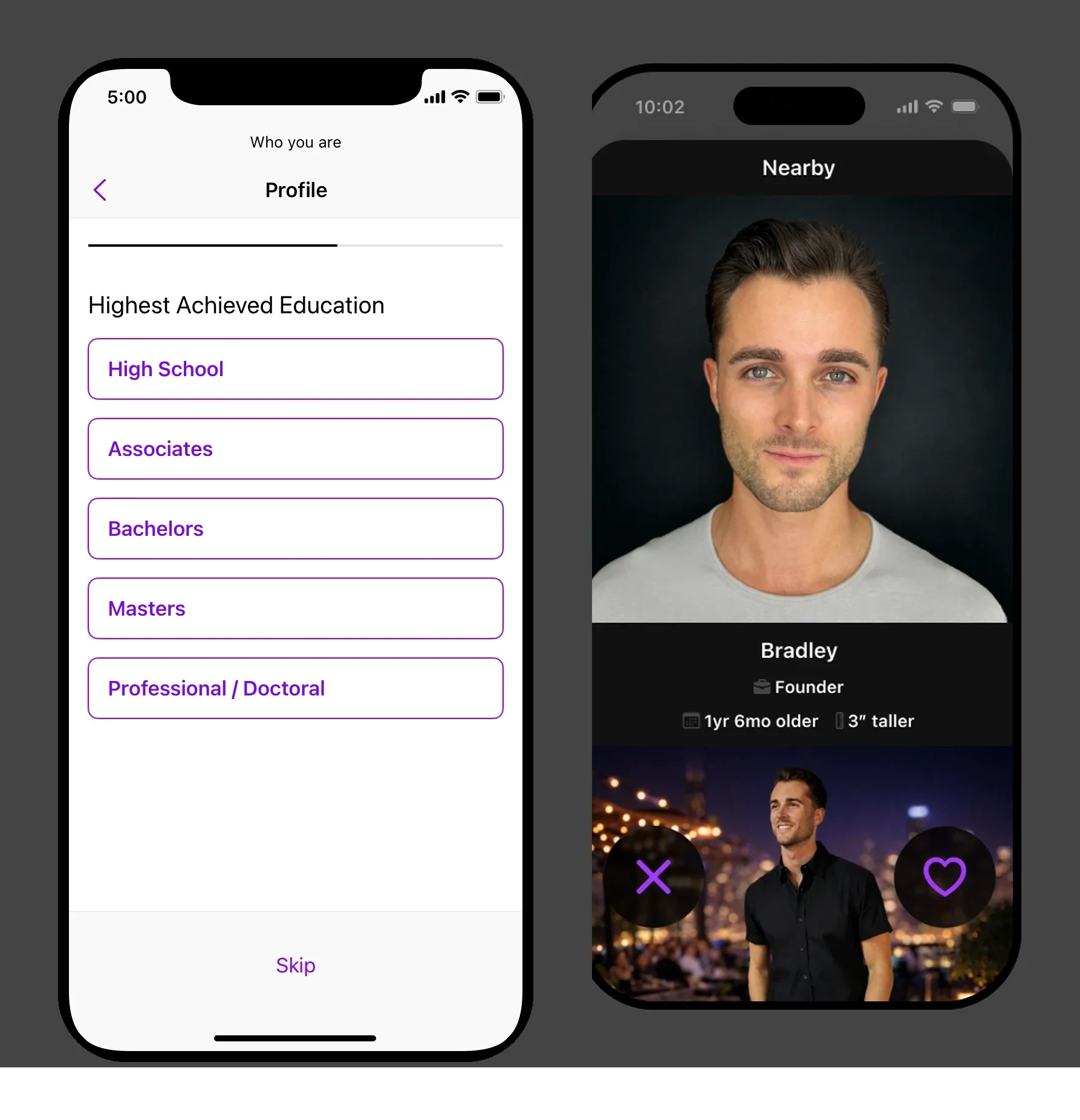
Show less, so people decide faster
We cut onboarding from about 30 steps to a short application.
What we gave up: the filters some users expect. You can't filter the people in the room either.
My first versions asked for everything other apps ask for: height, education, religion, politics, ethnicity, and the same list again as preferences. On a phone in a loud bar, nobody fills that in. And filters on identity were never the point of meeting someone in person.
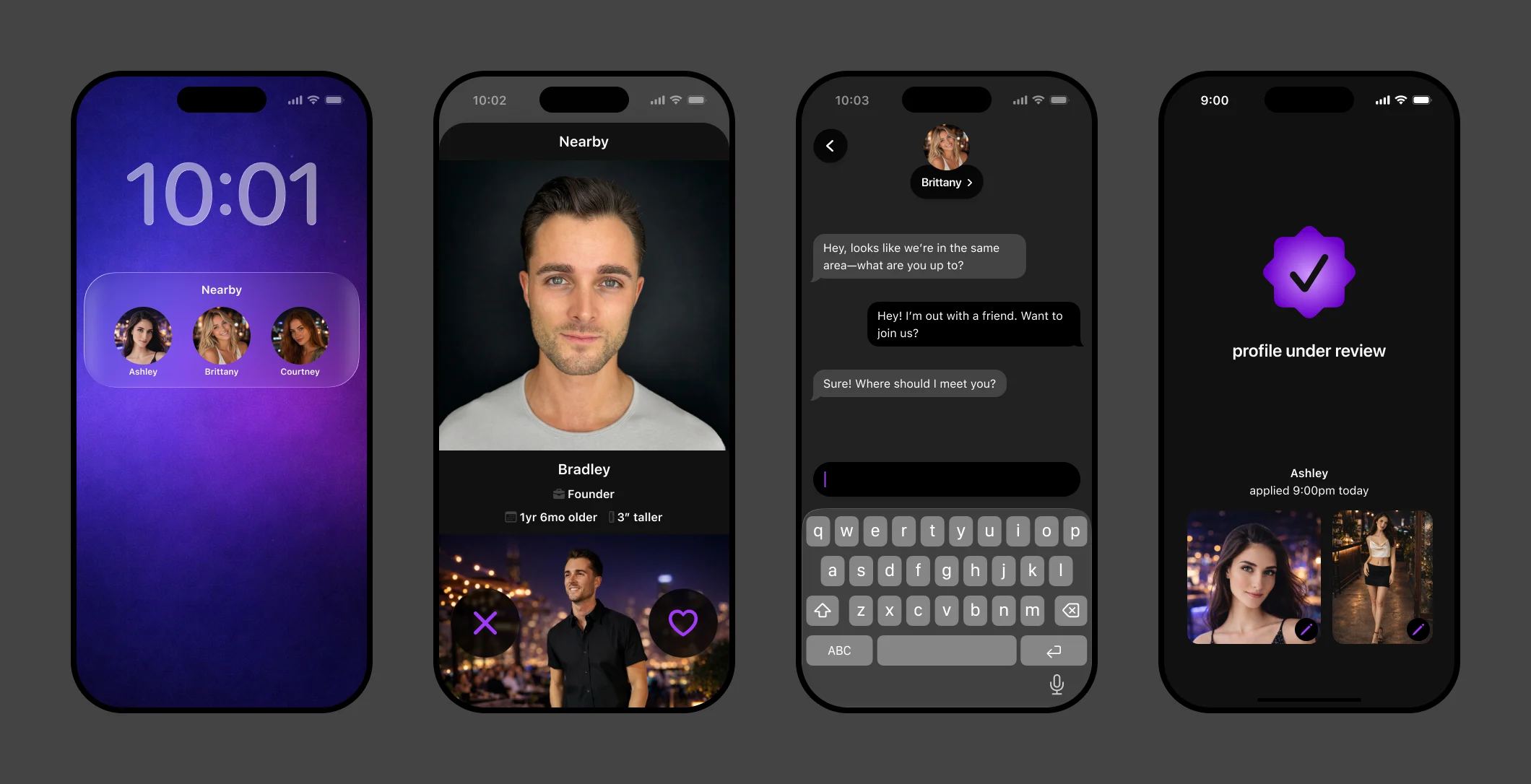
In 2.0 a profile is a name, a job and two photos: a headshot and a full-body shot. Facts show relative to you (“2 years older · 3 inches taller”), so you can decide in a glance.
Make people apply to get in
Open sign-up became an application with a review queue.
What we gave up: friction at the top of the funnel. The review screen became part of the launch itself.
A local network only works if people trust who’s in it. Every applicant is reviewed before they appear to anyone nearby.
People who don’t want to wait can pay $4.99 for priority review, which made the queue the first revenue moment.
Limit the alerts, not just the matches
Launch one flooded people with “someone nearby” alerts and broke the app. I owned it and redesigned the system.
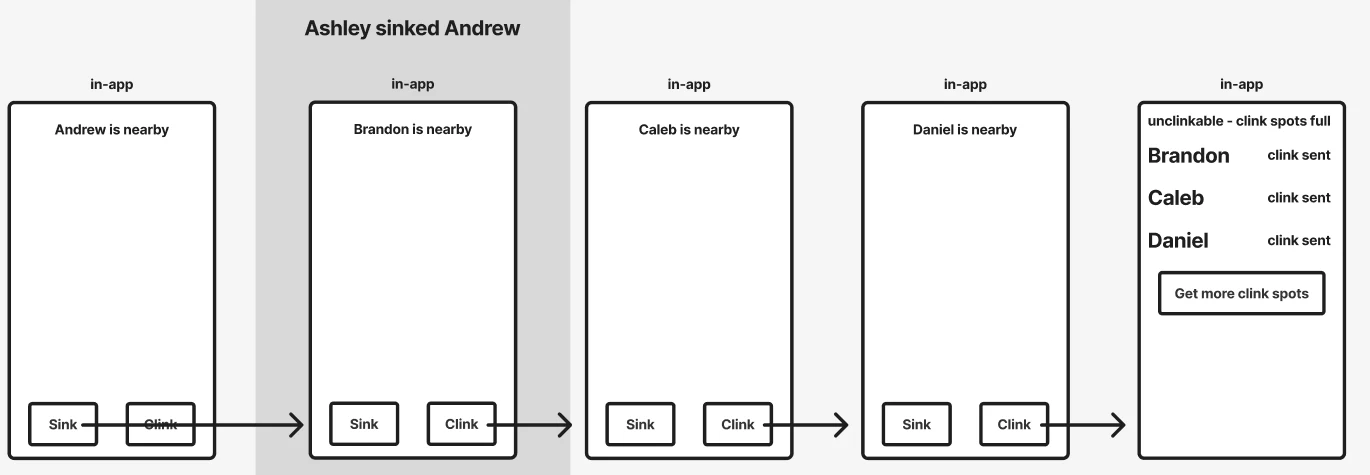
Clink’s core loop is a push notification: someone is nearby. You consider them, and if you both say yes, you can chat and meet.
Matches had a cap from day one. A seven-person roster in my 2019 sketches became three free spots and seven paid ones. But nothing capped the nearby alerts. When Clink launched in summer 2025, a busy bar meant every user got pinged about everyone, over and over. People were flooded, and the load broke the app.
I hired an engineer to rebuild Clink from scratch, and redesigned the system around three limits that work together:
- No more than three people can ping you at once. Everyone else waits in a queue and fills a spot when one opens.
- Only when you’ve said you’re out. You set “clinkable” hours, and can turn it on or off for tonight.
- Spots are the business model. Three are free and seven cost $9.99 a month. If you downgrade, you get a clear warning before your oldest matches drop.
“No more than three people can ping you at once, and only when you’ve said you’re out.”
The launch was a design problem too
A dating app with no one nearby is an empty room. So I designed the in-person launch too.
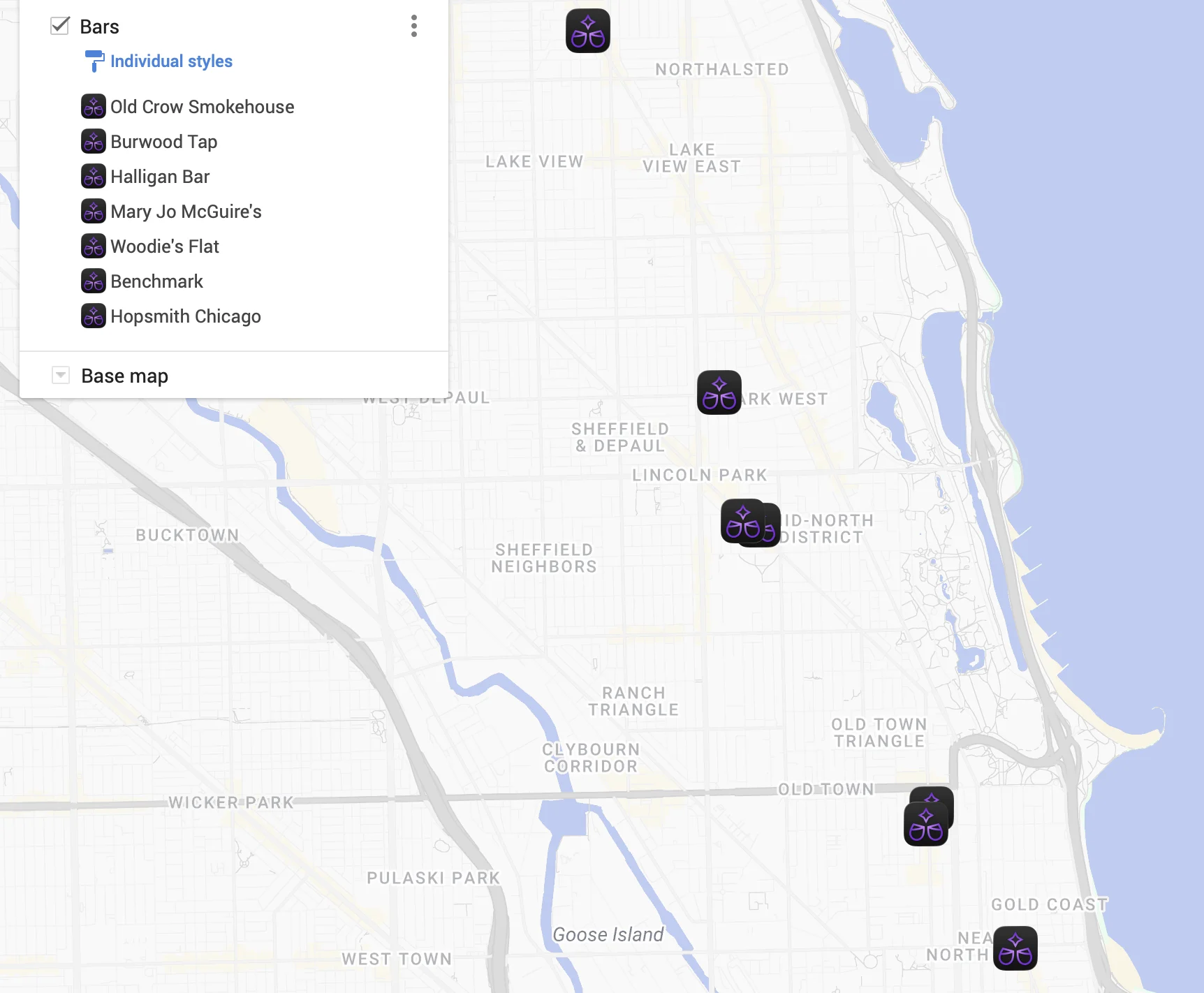
For the May 2026 relaunch, brand reps worked seven partner bars across Wrigleyville, Lincoln Park and Old Town. The offer was a free drink. Before handing it over, a rep checked for the “profile under review” screen. That one rule turned a drink card into a completed application.
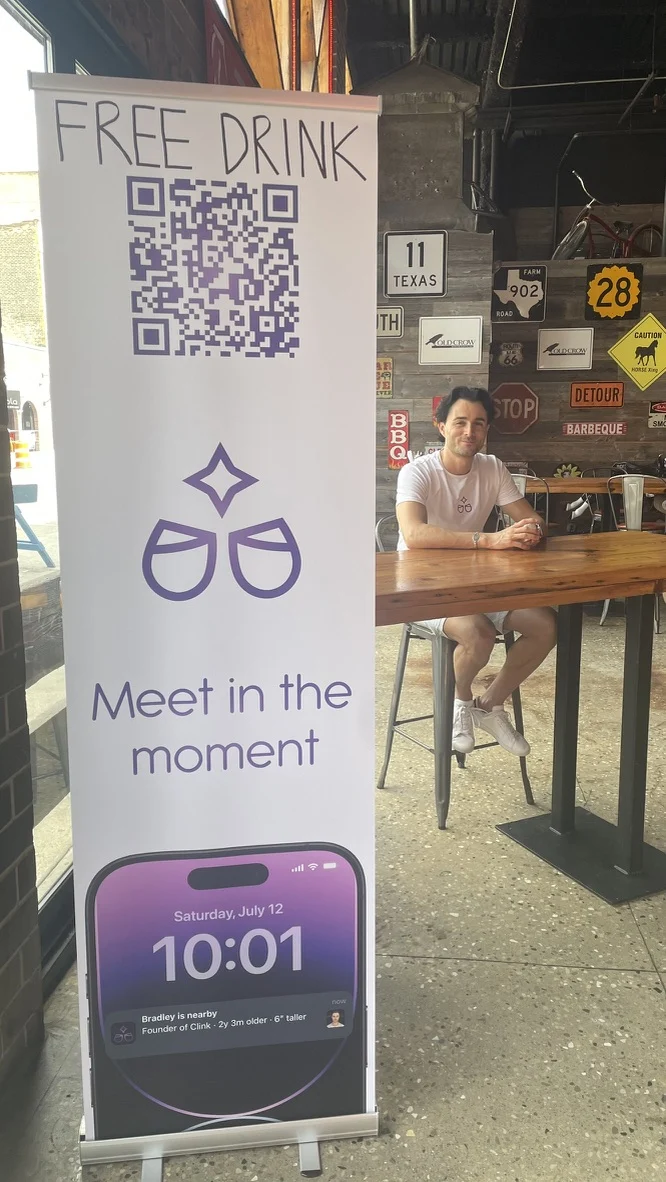
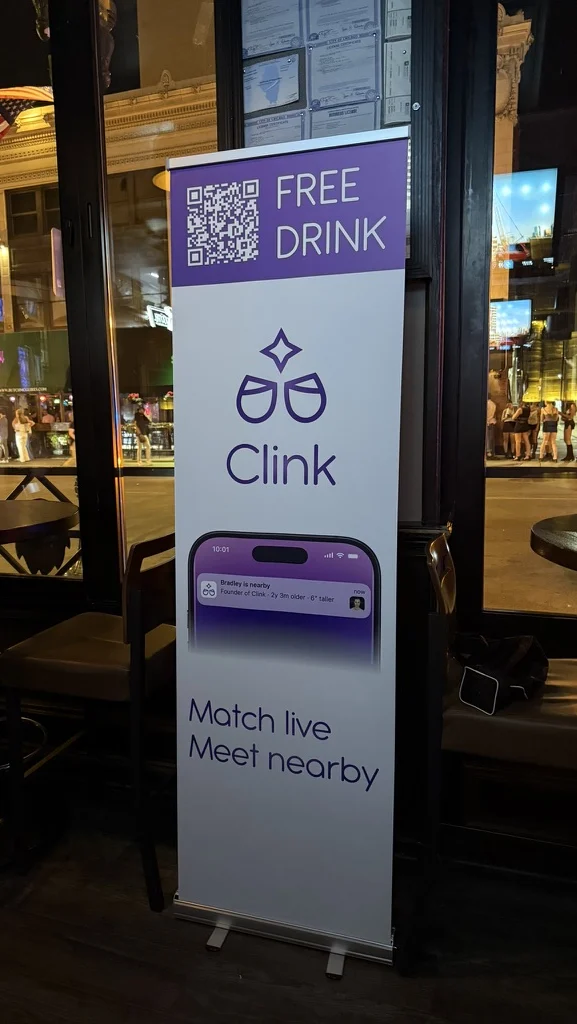
The banners show how the pitch sharpened. “Meet in the moment” in 2025 became “Free drink · Match live, meet nearby” in 2026.
Getting people in the door
Every flyer and bar banner had a QR code that went straight to the App Store, so the App Store page was Clink’s front door. I designed its screenshots and wrote its subtitle, description and keywords, and kept rewriting them over time.
- 1 QR code On every flyer and bar banner
- 2 App Store page 26.5% downloaded, daily average
- 3 Download
- 4 Apply to get in 1,001 applications since 2025
- 5 Approved 808 approved since 2025
I also used Firebase to track engagement past the download, like when two people became nearby and when they matched.
What I’d do differently: I’d add a tracked redirect per location, so I could see which bars and campuses actually drove signups.
The final experience
Clink 2.0 shipped on March 20, 2026 as a full redesign for iOS 26. It added a Live Activity on the lock screen that shows who’s nearby, so you don’t have to keep opening the app at the bar.
Results
In the two weeks after the Chicago relaunch on May 14, 2026:
- 534 new members, and 1,001 applications in total since 2025
- 60.5% day-1 retention in launch week, up 7.6% week over week
- 26.5% of App Store page visitors downloaded, on average per day
- About 2.9% of everyone who has downloaded Clink has paid
I paused Clink’s marketing at the end of July 2026, when the budget ran out. A local, two-sided network needs density, and density costs money. I stepped back from Clink in November 2026, after a full year on it full time.
What I’d do next
Start smaller and go deeper: one neighborhood, one night a week, with events first and the app as the way in. Density beats reach.
- Hired, funded and managed six contract engineers across four years, including the call to stop patching v1 and rebuild.
- Ran design QA against every staging build, with exact fixes side by side.
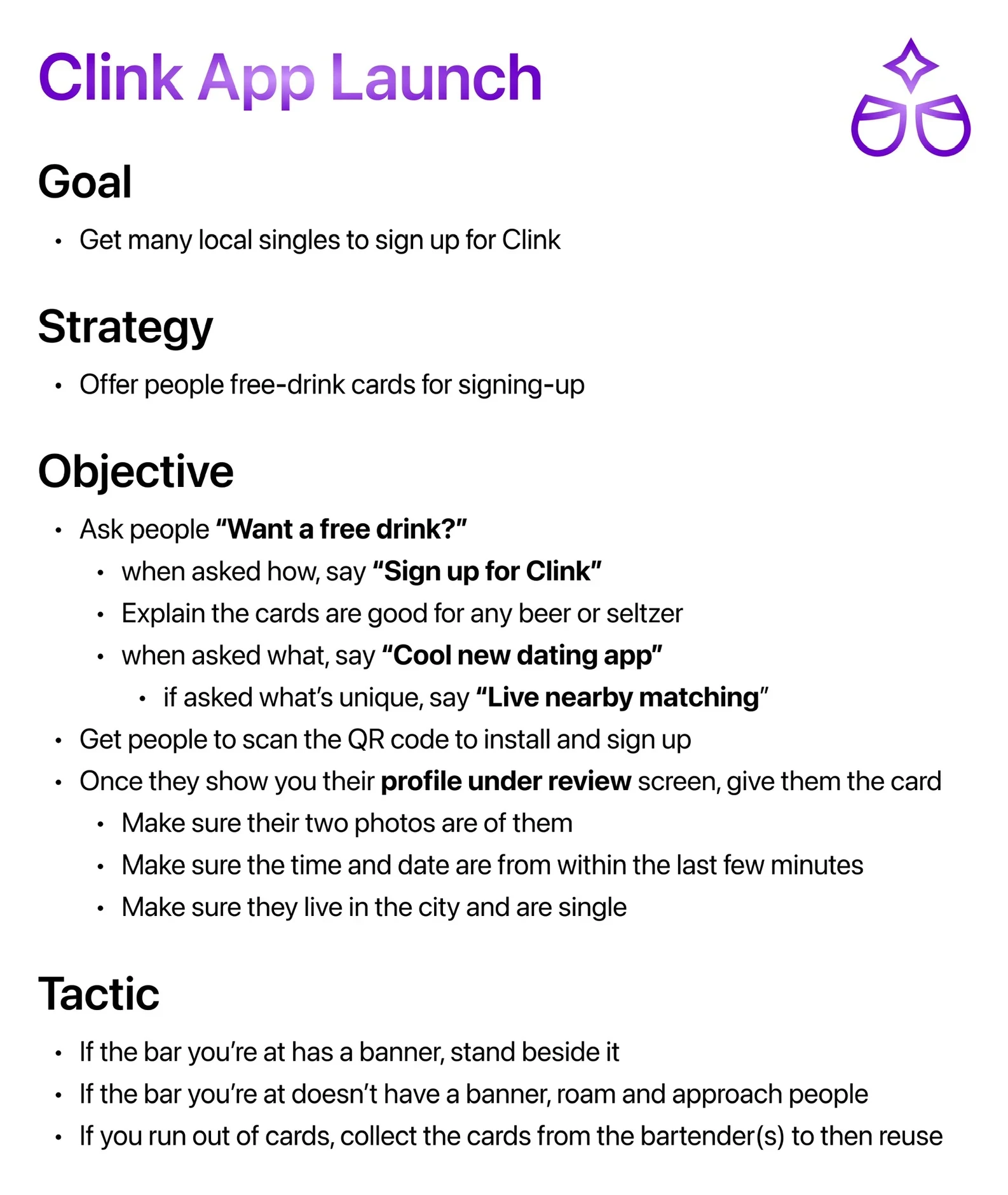
- Owned go-to-market: partner bars, brand reps, the launch script and the activation check.
- A full two-person state machine, with in-app and out-of-app behavior defined for every state.
- Edge cases designed up front: long names, banned users, forced updates, notifications off.
- Native iOS 26 patterns, including Live Activities.